Meet Enode Flex: the flexibility platform for energy retailers
When we started Enode, we believed that connecting and optimising energy devices could meaningfully improve how the energy system works. EVs, heat pumps, home batteries and solar were becoming common in people’s homes, but they weren’t helping solve the growing challenges of a renewable grid: variability, congestion and the mismatch between when energy is produced and when it’s needed.
Over the past few years, we’ve built Connect and Optimize to solve the first parts of that problem. Connect gives retailers reliable access to devices across dozens of brands. Optimize makes those devices use energy in smarter ways for both the customer and the grid. Today, more than half a million devices run through these products.
Working closely with retailers and OEMs has given us a front-row seat to how much potential sits in people’s homes and how difficult it has been for retailers to use it. Once they connected a few thousand devices, the same question came up again and again: how do we turn this into flexibility that actually supports our portfolio and the wider system?
That question matters because flexibility is becoming essential. Renewables don’t follow demand. EV charging peaks at the wrong times. Home batteries and heat pumps shift load in ways that aren’t always aligned with abundant supply. If we want a system built around renewables, demand needs to be able to move. The devices are ready. The market signals are there. The missing piece has been the infrastructure around them.
Retailers are central to solving this. They already manage the customer relationship, the tariffs, the market participation and increasingly the devices themselves. But turning thousands of devices into a resource that fits into day-to-day operations has been harder than anyone expected. Flexibility touches trading, IT, product, billing, forecasting and customer operations — and when something touches everyone, it often belongs to no one.
One reflection from Thorvald Thorsnes, our CRO and co-founder, captured this reality well during an early workshop with a customer:
“The challenge isn’t proving flexibility. It’s making it fit into how retailers actually operate.”
That insight stayed with us.
Introducing Flex
Flex takes the devices retailers already connect through Enode and turns them into a flexibility resource they can operate. It gives teams one place to understand their flexible load, how it’s changing and how much they can shift at any moment. They can test scenarios, see how changes ripple through their portfolio and send reliable instructions to each device. And all of this fits naturally into the systems they already run: their EMS, trading tools, billing systems, CRM and customer app.
In practice, Flex becomes the engine behind a residential VPP. Not a black box. Not a parallel system. A layer retailers can operate themselves and build into their strategy.
During an early review of Flex, Henrik Langeland, CEO and co-founder of Enode put it in a way that matched what we’d seen across dozens of retailers:
“There’s so much potential sitting in people’s homes, but retailers haven’t had the tools to use it. Flex is about making that potential practical in day-to-day operations.”
Here’s how it works.
A clear view of your flexibility
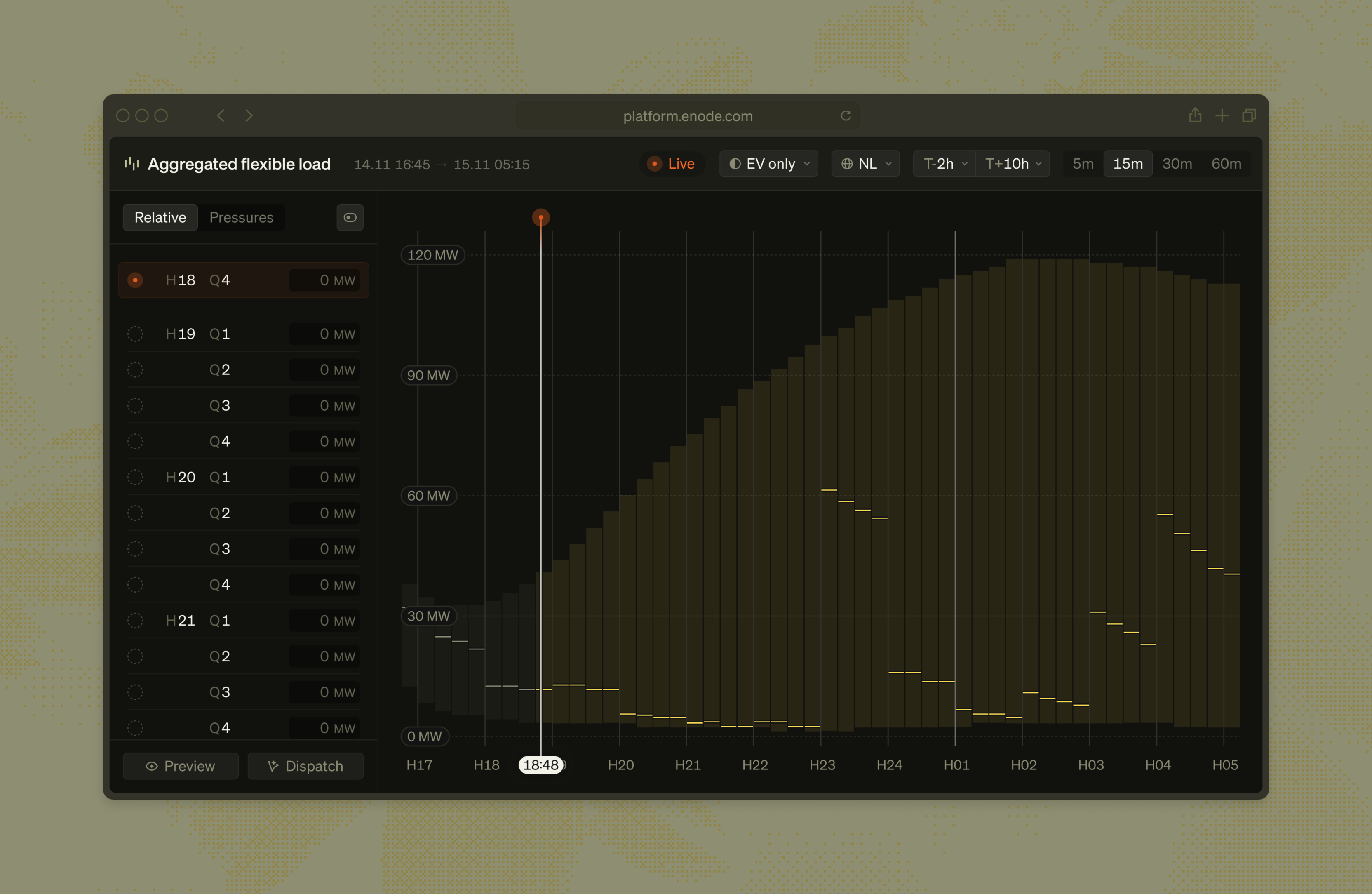
Flex aggregates thousands (or hundreds of thousands) of devices into one real-time flexibility curve.
You see:
- your baseline load
- up and down flexibility
- settlement-period granularity
- how the curve shifts as users connect and constraints evolve
Trading teams recognise the model immediately: a curve with shapeable load, backed by the devices your customers already own.
Tools to shape load with confidence
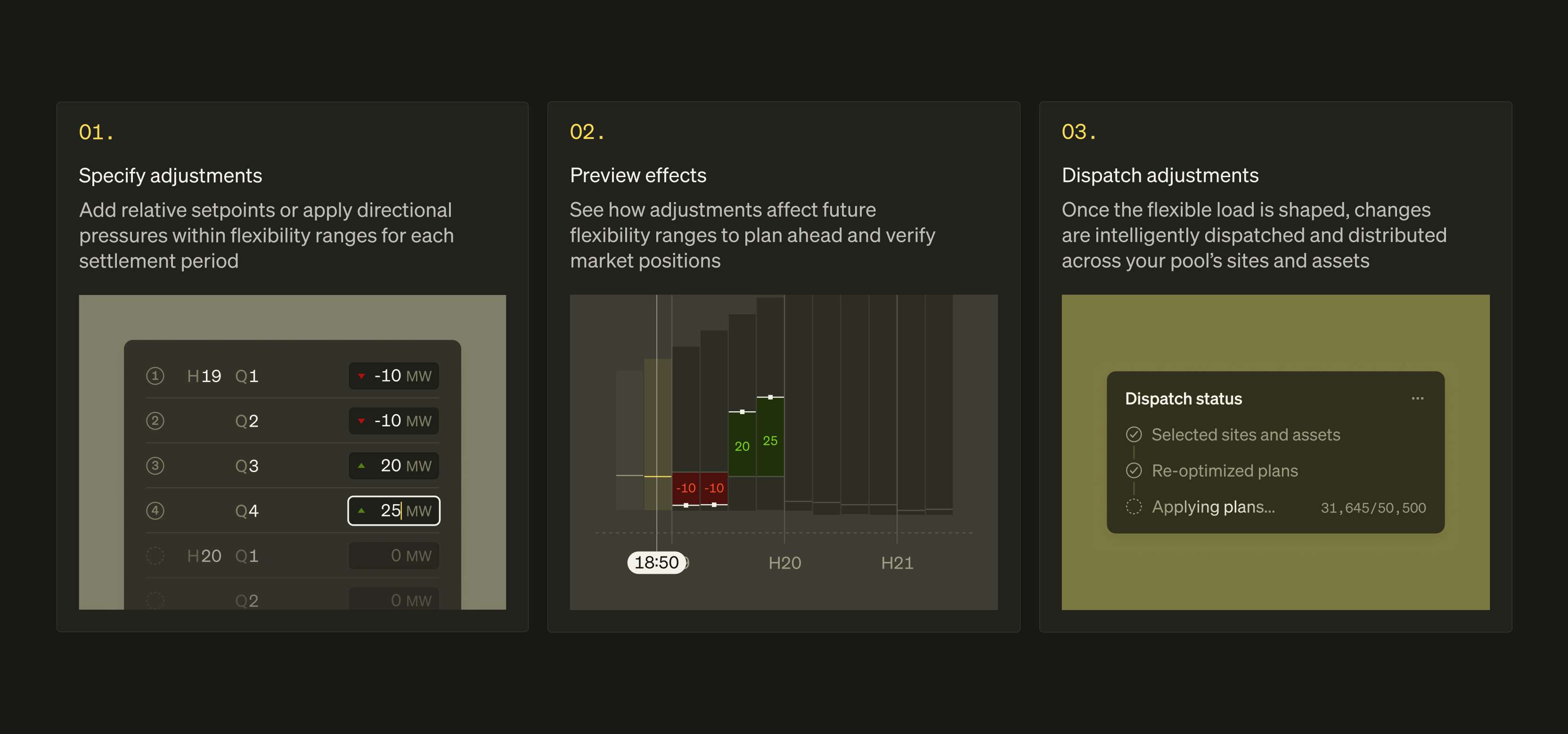
Flex introduces a simple workflow: preview a scenario, then dispatch it.
You can model how shifting load in one 15-minute period affects the rest of the day, spread activation intelligently across devices, and ensure user preferences and constraints are respected.
Once you dispatch, Flex selects the right mix of assets to meet the target. It’s flexibility you can operate, not just model — and the foundation of your residential VPP.
A system that fits your organisation

Flex plugs into the systems retailers already run: EMS, CRM, billing, forecasting, customer apps, and smart tariffs.
Many teams start in the Flex Dashboard to build internal alignment. As they scale to tens or hundreds of thousands of devices, they integrate the Flex APIs directly into their energy management workflows.
And importantly, retailers stay in control — both of the customer experience and the commercial model. Nothing is hidden.
This is what a residential VPP looks like when it’s built to fit inside an enterprise, not alongside it.
Built with the industry
Flex was shaped together with a group of early customers who needed a flexibility engine that matched their trading models, market participation, and enterprise architecture. It combines years of learning from Connect and Optimize with hands-on integration inside real retail organisations, the kind of work that only happens when you build alongside teams who are trying to use flexibility in practice, not theory.
Co-development made Flex practical from day one. It feels familiar because it was shaped by teams who are already operating in these markets.
And it’s ready for real operations. Retailers use Flex to:
- optimise day-ahead and intraday
- reduce imbalance costs
- manage volatility
- participate in ancillary services
Whether you're working with 5,000 devices or preparing for 200,000+, Flex gives you a reliable way to use residential flexibility as part of your portfolio.
What’s next
Flex is now available to all Enode customers. If you’re already using Connect or Optimize, you’re closer to getting value from it than you might think. Most teams start in the Flex Dashboard and build from there.
👉 Explore Flex: https://enode.com/flex
This is an important moment for us at Enode. Flex brings together the layers we’ve been building since the beginning: connecting devices, optimising them locally, and now helping retailers use them as a flexible resource at scale.
We believe this will play a meaningful role in building a more renewable and resilient energy system, and we’re excited to see how our customers use it.