From connected customers to flexible homes: How Tibber and Enode are shaping the open energy ecosystem for the next grid

For most of the power system’s history, flexibility came from large industrial assets.
That is changing. Electric vehicles, home batteries, solar panels, heat pumps and chargers are bringing flexibility into millions of homes. As these technologies become more common, households are becoming active participants in the energy system.
For energy retailers, this creates a new opportunity.
The challenge is no longer simply supplying electricity. It is helping customers optimize how they use it, while building the foundation for a more flexible energy system.
Tibber has built its platform around this idea.
Through the Tibber app, customers can connect energy devices and automate how electricity is used in their homes. Charging can be scheduled automatically based on electricity prices, helping customers save money without actively managing their energy usage.
As more customers connect devices, the opportunity expands beyond optimization. Connected homes become a foundation for residential energy flexibility.
Turning connected devices into customer value
For Tibber, connected devices are a core part of the customer experience.
Customers use the Tibber app to automate energy usage based on dynamic electricity prices and system conditions. Features such as Smart Charging help EV owners charge when electricity is cheaper, while programs such as Grid Rewards allow customers to earn money by supporting the grid.
The value is practical: customers save money, earn rewards, and gain a simpler way to manage energy at home.
“Our customers care that their charging works, that automation behaves as expected and that they save and earn money. Reliable connectivity is what makes that experience possible at scale. We’ve assessed this space thoroughly and explored multiple approaches, and chose to work with Enode to operate a selected part of this layer as part of our core platform. This allows us to expand device coverage and ensure reliable operation at scale, while keeping the experience simple for customers.”
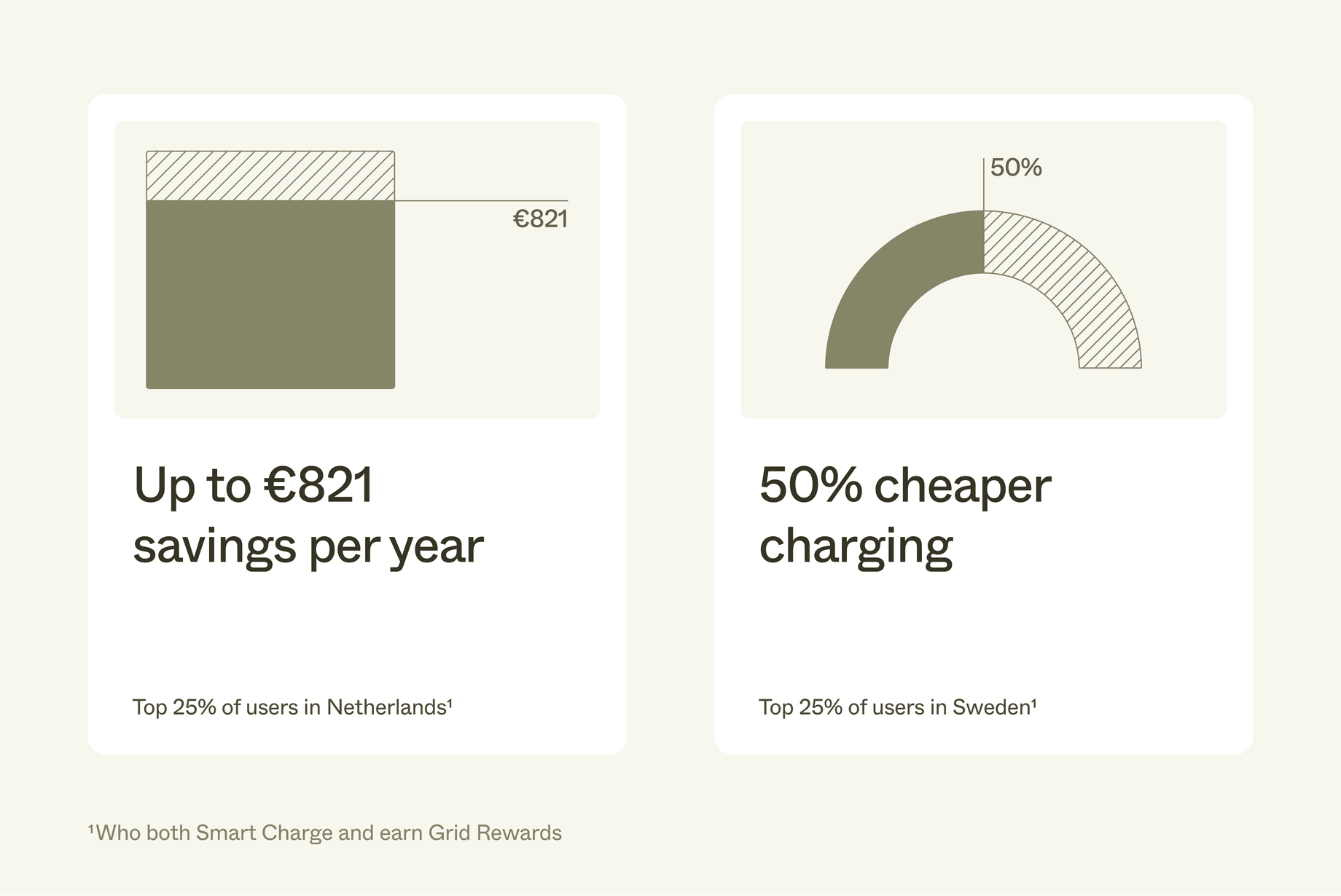
Connected energy devices also create monetary value for customers. Households using Smart Charging and Grid Rewards can significantly reduce charging costs while earning additional rewards for supporting the grid. In the Netherlands, top 25% of customers have reported up to 821 EUR savings per year, while users in Sweden experience 50% cheaper charging.
Connected energy devices are also becoming strategically important for energy retailers. Features such as Smart Charging create regular engagement with customers and establish a foundation for future energy services. As more households adopt EVs, batteries and other distributed energy resources, retailers that can successfully engage these customers are increasingly well-positioned to build differentiated energy products and flexibility programs.
Open energy creates customer choice
As more devices enter the home, customers should not be locked into isolated ecosystems.
A household may own an EV from one manufacturer, a charger from another, and a battery from a third. Customers expect these technologies to work together and connect to the services that create the most value for them.
This is where open energy becomes important.
Open energy is built on trusted and standardized interfaces that allow devices, energy retailers and software platforms to work together reliably. It creates a foundation where customers can connect the devices they already own to the services they want to use, while giving retailers the ability to build products across a broad ecosystem of technologies.
For customers, that means more choice. For energy companies, it creates a foundation for innovation.
From connected devices to residential flexibility
Connecting a device creates value. Coordinating multiple devices creates significantly more.
A customer might start by connecting an EV for Smart Charging. Later, they may add a battery, solar panels, or a heat pump. Each asset contributes flexibility in a different way. An EV can shift charging. A battery can store and release energy. A heat pump can adjust consumption while maintaining comfort.
For many retailers, flexibility programs have historically focused on individual devices. The next phase of the market will be different.
As households adopt multiple energy assets, the opportunity shifts from optimizing individual devices to coordinating energy across the home as a whole.
This is where residential energy flexibility emerges. The value comes not from individual devices acting independently, but from multiple assets working together as part of a coordinated system.
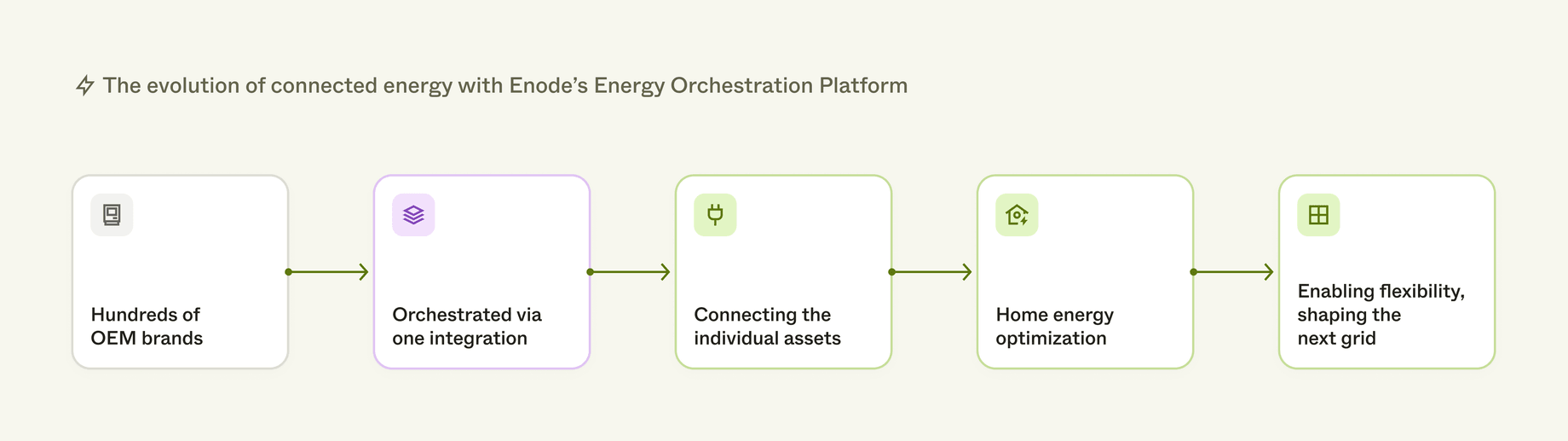
Orchestrating assets across the home and grid
To support this, Tibber works with Enode across a growing set of device integrations.
Enode helps energy retailers connect, optimize and orchestrate distributed energy assets across the home and grid. For Tibber, Enode operates a selected part of this layer as part of Tibber’s broader platform, helping expand device coverage while maintaining reliable operation across connected energy assets.
This allows Tibber to focus on building great customer experiences while creating the foundation for future flexibility services.
As more customers connect EVs, chargers, batteries and other energy devices, the challenge becomes larger than any individual integration. Success depends on the ability to coordinate assets reliably across homes and markets.
What begins as connectivity becomes orchestration. What begins as one connected device grows into an important puzzle piece of a broader, open energy system.
Building the next grid
European energy markets are changing. The energy system is becoming more distributed.
Unlocking flexibility requires more than connected devices. It requires connected homes, interoperable ecosystems and the ability to coordinate assets as part of a system. For Tibber, connected devices help customers save money, earn rewards, and get more value from the technologies they already own. For Enode, they are the foundation for residential energy flexibility.
Together, Tibber and Enode are helping build a future where homes are not only consumers of electricity, but active participants in the next grid.