Bidirectional charging is ready. Is your market?
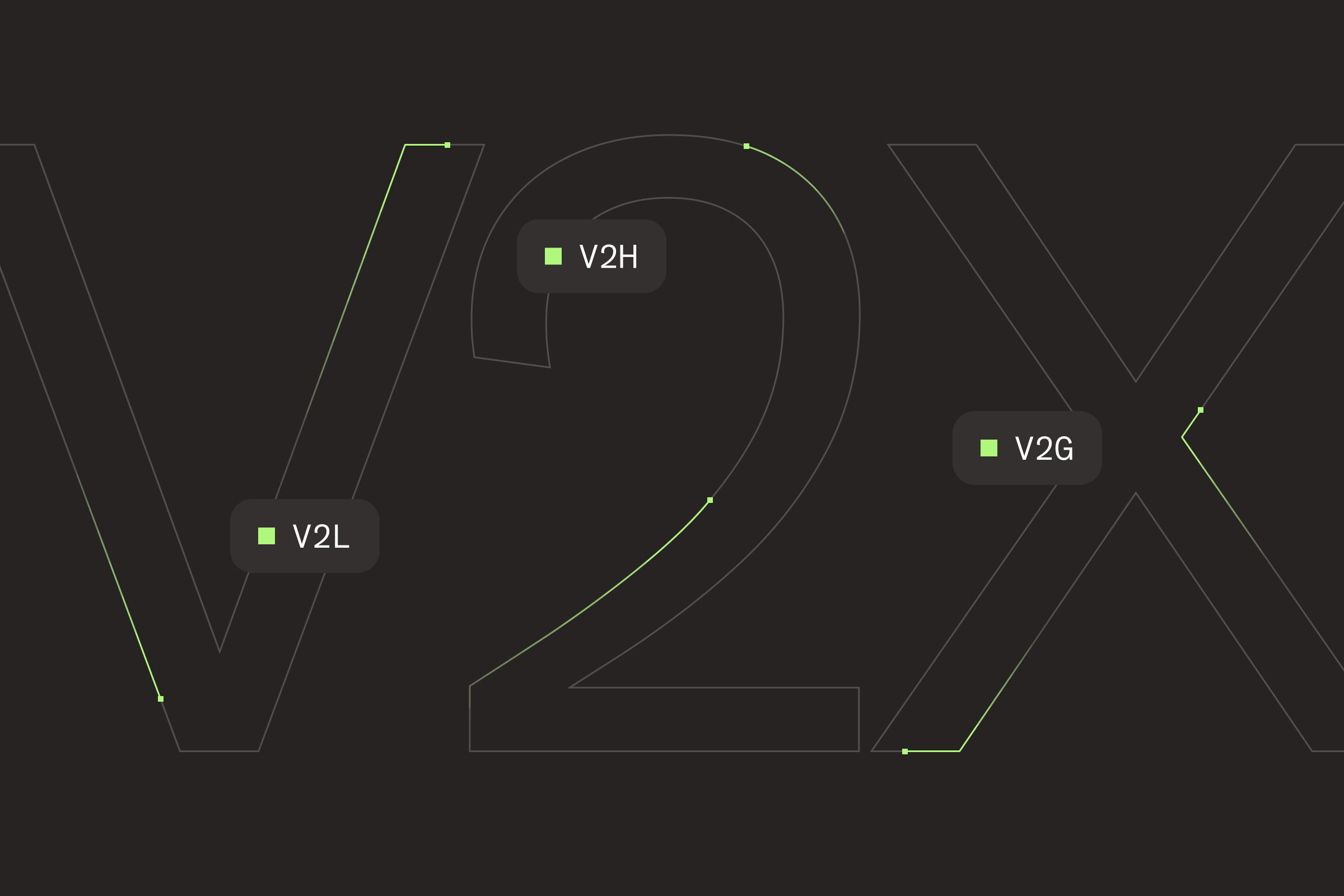
Right now, EV charging only goes one way. The grid fills the car, and that’s it. Bidirectional charging opens the other direction, so the car can give power back. You’ll see it written as V2X, vehicle-to-everything.
The three worth knowing: V2H (vehicle-to-home), where the car powers your house; V2L (vehicle-to-load), where it powers a single appliance, handy for camping or an outage; and V2G (vehicle-to-grid), where it sends energy back to the grid.
Why it’s a big deal comes down to size. A car battery is usually the largest one at the house, often 60 kWh or more, which is several times the size of a typical home battery. Let it discharge and the driveway becomes a serious store of energy.
Today, most of the value is within the home. Run the house off the car through the pricey evening hours and your customers skip the peak — same idea as a home battery, just much bigger. Backup power in an outage is worth a lot to some people and nothing to others. Selling back to the grid is the largest prize, but it only pays where the power prices and the rules line up.
And the rules are the catch. Whether a two-way car makes money depends on a few decisive things. First, how the energy it sends back gets metered and paid for. Then, whether it gets taxed twice: once on the way in and again on the way out. It also matters whether a parked car can be bundled with thousands of others to sell into balancing markets, and how easily the grid operator approves the connection.
Some markets already pay a V2G car for avoided peaks and grid services. In others, you’d struggle to earn more for the energy you send back than you paid for charging in the first place. The UK, France and Germany are furthest along, and that’s where you’ll find V2X offers for consumers today. All these three countries treat a car’s exported energy like a home battery’s: it isn’t taxed twice, and the grid operator has a clear route for approving connections. The Netherlands has a lot of potential for V2X: the most congested grid in Europe, the highest solar density, and a net-metering scheme ending in 2027 that will leave millions of solar homes looking for somewhere to put their midday surplus. But the taxes paid on energy that goes into the car are never recovered when it comes back out, so exporting rarely pays. Norway has the highest share of EVs on the road, but not yet the business case, because cheap hydro and small price swings leave less to earn than elsewhere.
So for now, V2G is a market-by-market question. The money today is at home, and in the few markets where the rules for exporting to the grid already work. In the rest of the markets, you should prepare now and move when the rules do. The good news is that regulation is moving in the right direction.
Preparing well takes two kinds of deep knowledge: how each car’s hardware behaves and how each local energy market and its regulations work. That’s why V2X needs closer collaboration between energy retailers and car manufacturers than ever before – Enode’s platform brings them both together. With Enode, you build the foundation for V2X once, and from there you can quickly expand it to more countries, to more EV brands and models, and to more customer offerings.